
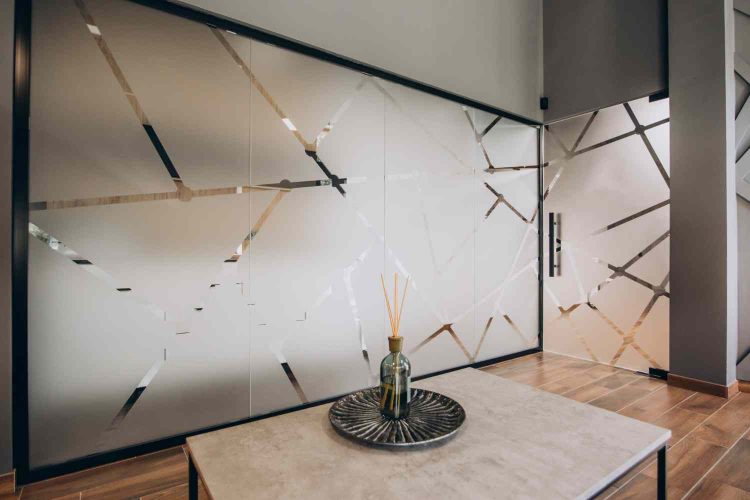
Is your open-plan office feeling a little too “open”? If you are struggling to balance a modern, collaborative aesthetic with the practical need for focus and confidentiality, frosted vinyl is your best solution.
Frosted vinyl is a pressure-sensitive, translucent film applied to glass surfaces to create instant privacy, diffuse harsh lighting, and add decorative branding elements. Unlike permanent sandblasted glass, it is affordable, removable, and highly customizable.
If you are a decision-maker looking to optimize your physical workspace, here is how you can use frosted vinyl effectively.
Why Choose Frosted Vinyl Over Other Privacy Solutions?
The primary reason to choose frosted vinyl is the cost-to-value ratio. Replacing existing clear glass with etched or sandblasted glass is a capital-intensive project that is effectively permanent.
In my experience, frosted vinyl offers the same high-end, professional look without the massive renovation headache.
Furthermore, visual privacy directly impacts employee output. According to a report by Staples, 42% of employees cite distractions as a major hurdle to their productivity, and open-floor plans without privacy zones exacerbate this issue. Source: Staples Workplace Survey.
Frosted film creates that “heads-down” environment without making your office feel like a windowless basement.
Where Should You Use Frosted Vinyl?
You don’t need to cover every pane of glass in your facility. Strategically placing film is more effective than full coverage.
Here is where I always recommend applying it:
- Conference Rooms: Use a “privacy band” (a middle strip of film) to keep the room feeling airy while obscuring eye-level distractions.
- Entryway Doors: This is prime real estate for your logo. Cut-out branding in frosted vinyl looks professional and reinforces your company identity.
- Retail Storefronts: If you have glass windows, use vinyl to block clutter in your back office while still allowing natural light to enter the showroom.
The Common Mistakes I See Most Often
I have walked into countless offices where the frosted vinyl looks like a DIY disaster. The material itself is durable, but the installation is where projects fail.
The biggest mistake is ignoring the “wet method.”
Many people try to apply film dry, which traps air bubbles and creates creases. You must use a solution of water and a drop of dish soap to “float” the vinyl into place before squeegeeing the liquid out.
Another critical tip: Don’t skimp on quality. Cheap, thin films will shrink and peel at the edges within six months. Always insist on cast vinyl rather than calendered vinyl for long-term interior glass installations. It holds its shape better and resists peeling.
Final Thoughts: Is It Right for You?
Frosted vinyl is the most versatile tool in an interior design arsenal. It allows you to pivot quickly, change your branding, or adjust office privacy levels without a contractor.
Your next steps:
- Assess the glass: Ensure your surfaces are smooth and non-porous.
- Order samples: Always test the opacity of the film in your office’s specific lighting conditions before committing to a full roll.
- Hire a pro for large jobs: Unless you are highly experienced, the labor cost for a professional installer is worth the peace of mind to ensure a bubble-free finish.
Do you have a glass partition that needs a refresh? Start small with a simple logo cutout, and watch how it transforms the room’s atmosphere.